- Garage Door Opener Outlet Location – What Actually Matters
- Where Is the Garage Door Opener Outlet Located?
- Garage Door Opener Outlet Placement (Best Practice)
- Outlet Requirements for a Garage Door Opener
- Garage Door Outlet Location and Electrical Code
- What If There Is No Outlet Near the Opener?
- Common Problems Caused by Poor Outlet Location
- Final Notes
- Author
Garage Door Opener Outlet Location – What Actually Matters
Most people never think about the outlet that powers their garage door opener – until something starts acting up. In reality, where that outlet is installed can make a noticeable difference. I have seen plenty of cases where power loss, random shutdowns, or an opener that will not respond had nothing to do with the motor itself. The issue was the way it was powered.
An outlet placed too far away, a cord stretched tight across the ceiling, or a quick extension-cord solution can all create reliability problems over time. It might work at first, but it is not the way the system was designed to operate.
Here is what you should know about proper outlet placement.
Where Is the Garage Door Opener Outlet Located?
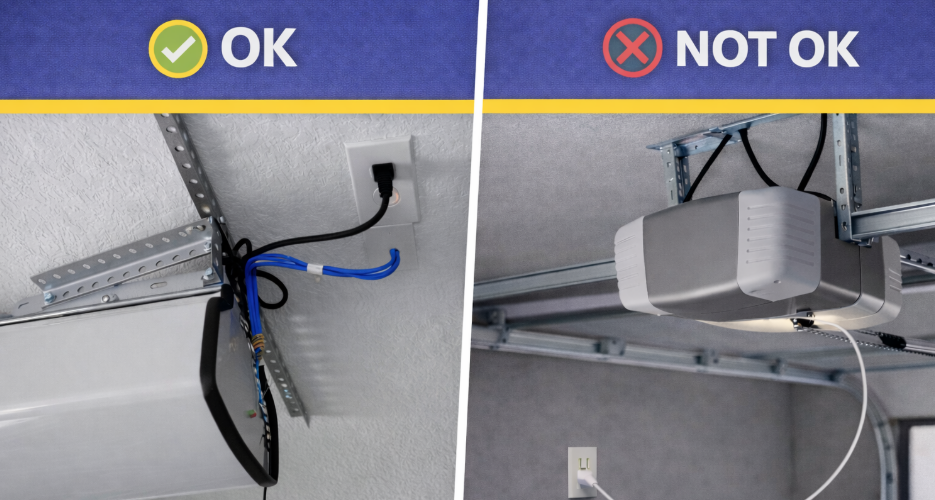
In a standard residential garage, the outlet for the opener is usually installed in one of these spots:
- On the ceiling, close to the motor unit
- On the wall above the garage door, positioned so the factory power cord reaches comfortably
- Attached to a ceiling joist, slightly behind the opener housing
The positioning is intentional. A properly installed outlet should ensure:
- The power cord is not pulled tight or dangling loosely
- No extension cords are used
- The outlet remains accessible if the unit needs servicing
If you are trying to find yours, look within about 3 to 6 feet of the opener motor – most commonly directly above it on the ceiling.
Garage Door Opener Outlet Placement (Best Practice)
Proper garage door opener outlet placement follows a few basic rules:
- The outlet should be dedicated to the opener
- It should be mounted above floor level (never near the ground)
- The outlet must not interfere with door tracks or moving parts
- The cord should hang freely without tension
In newer homes, the outlet is often placed directly above the opener, making installation clean and safe.
Outlet Requirements for a Garage Door Opener
Basic garage door opener outlet requirements include:
- Standard 120V household outlet
- Proper grounding
- Circuit capable of handling the opener motor load
- In some regions, GFCI protection (local code dependent)
While many homeowners ask whether a garage door opener must be on GFCI, this depends on:
- Local electrical code
- Distance from water sources
- Whether the outlet serves other devices
If your garage door opener outlet is on a GFCI circuit, frequent tripping may indicate a wiring or grounding issue.
Garage Door Outlet Location and Electrical Code
Electrical codes typically require:
- The outlet to be accessible
- No use of extension cords as permanent wiring
- Secure mounting to a junction box
If you are installing a new opener, always verify garage door opener outlet code requirements for your area.
What If There Is No Outlet Near the Opener?
If there is no outlet for the garage door opener, your options are:
- Install a new ceiling-mounted outlet
- Relocate an existing outlet (by a licensed electrician)
- Re-route wiring from a nearby circuit
Using power strips or extension cords is not recommended and may violate electrical codes.
Common Problems Caused by Poor Outlet Location
Incorrect garage door outlet location can cause:
- Opener not powering on
- Random shutdowns
- Garage door opening partially and stopping
- Intermittent operation during cold weather
- GFCI outlets tripping unexpectedly
If your opener powers on but behaves erratically, checking the outlet location and power source should be one of the first steps.
Final Notes
The garage door opener outlet location is a small detail that has a big impact on reliability and safety. Whether you are installing a new opener or troubleshooting an existing one, ensuring proper outlet placement can prevent many common issues.
If your garage door opener outlet looks incorrect, unsafe, or inaccessible, correcting it early can save time, money, and frustration later.
