A first-time buyer and an enthusiast adding a fifth watch should not reach the same conclusion about Invicta and Seiko.
Invicta and Seiko both sell affordable automatic watches, but they are not equal as watch brands. Invicta is strongest when you want a bold, inexpensive watch with strong specs on paper. Seiko is stronger when you want better long-term reputation, more original design, better enthusiast trust and a clearer upgrade path.
The simple answer is this:
Buy Invicta if you want the cheapest automatic dive-style watch with a big wrist presence.
Buy Seiko if you want the better watch brand overall.
Invicta can be a fun budget buy, especially the Pro Diver. But if you are choosing one brand to trust long term, Seiko is the safer and more respected choice.
What a Fair Invicta vs Seiko Comparison Must Explain
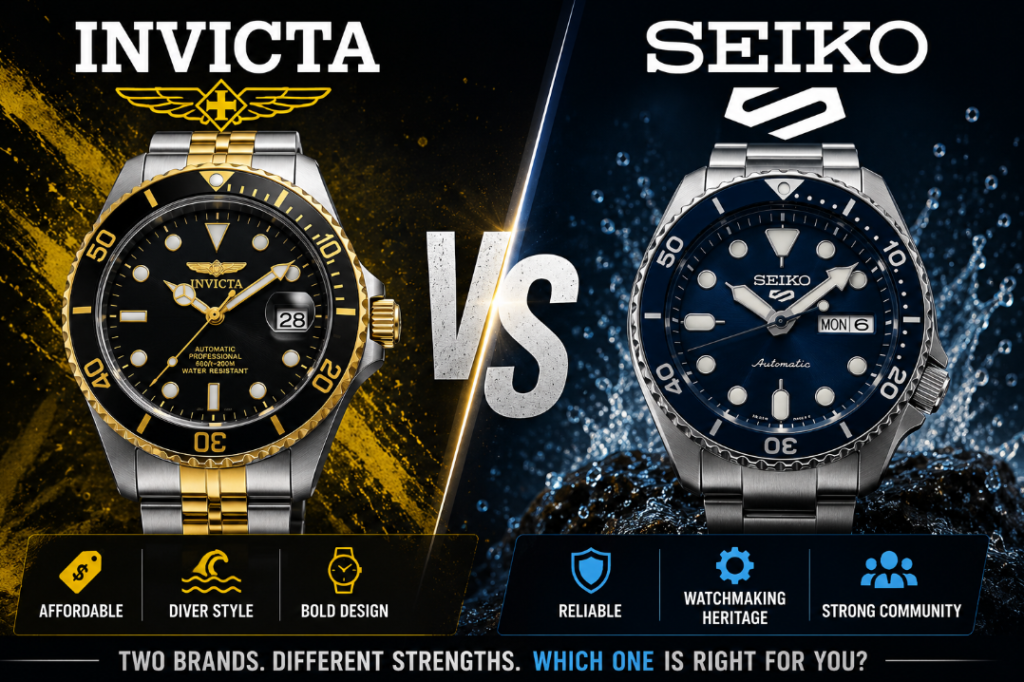
Invicta is all about discount value. At full retail, many Invicta watches make less sense. At a heavy sale price, the Pro Diver can be a very strong cheap automatic. Seiko usually costs more, but the extra money buys better brand reputation, stronger enthusiast trust, more original designs and better long-term appeal. The key point:
Invicta is better cheap. Seiko is better value long term.
What This Comparison Is Really About: Invicta
Invicta Pros
Invicta Cons
Seiko Pros
Seiko Cons
The Parts Your Hand Notices First
Invicta can be surprisingly good for the price, especially when bought on sale. The Pro Diver 8926OB has a 40 mm stainless steel case, screw-down crown, mineral crystal, exhibition case back and 200m water resistance according to Invicta’s official listing. That is a lot of specification for the money. Seiko usually feels more trustworthy as a full watch brand. Entry-level Seiko 5 models are not perfect, and bracelets can still feel basic, but the overall product feels more original and more watch-focused. The Seiko 5 Sports SRPD55, for example, has a 42.5 mm stainless steel case, Hardlex crystal, 100m water resistance, LumiBrite and a 4R36 automatic movement.
Invicta often wins the spec sheet for the lowest price. Seiko wins the brand confidence test.
The Invicta Pro Diver 8926OB has a very wearable 40 mm case, which is one reason it remains popular. Many cheaper Invicta models are much larger and more polarizing, but the 8926OB is one of the safer sizes in the catalog. Invicta lists the case size at 40 mm. The Seiko 5 Sports SRPD55 is larger at 42.5 mm, but the 46 mm lug-to-lug helps it wear better than the case diameter suggests.
For smaller wrists, the Invicta Pro Diver may actually wear better. For a more casual sports-watch feel, the Seiko 5 feels more relaxed.
This is where the difference becomes obvious. Invicta is famous for bold styling, oversized cases and homage-style designs. The Pro Diver 8926OB is popular partly because it gives buyers a Submariner-style look at a very low price. That can be attractive if you simply like the design and do not care about originality. Seiko has a stronger design identity. Seiko 5 Sports, Prospex, Presage and King Seiko all have recognizable Seiko DNA. Some models are inspired by older Seiko divers, field watches and dress watches rather than copying another brand’s icon too closely.
Invicta is better if you want the cheapest version of a familiar look. Seiko is better if you want a watch with its own identity.
Where Engineering Becomes Practical: Seiko
This is closer than some Seiko fans want to admit. Many Invicta Pro Diver automatic models use reliable Japanese automatic movements, and the official Invicta 8926OB listing identifies the movement as IM-A-005. Seiko’s common 4R36 movement is not luxury-grade, but it is proven, widely used and easy to understand. It offers automatic winding, hand winding, hacking seconds, day-date and around 41 hours of power reserve in the Seiko 5 Sports SRPD55. If you only compare entry-level automatic movements, Invicta is not bad at all.
But Seiko has a much deeper movement ecosystem, from 4R and 6R movements to solar, quartz, GPS Astron and Grand Seiko-level calibers. Winner: Seiko overall. Both affordable Invicta and Seiko automatics can vary in accuracy. These are not precision luxury chronometers, and you should not expect quartz-level performance.
A good Invicta Pro Diver may run well. A good Seiko 5 may also run well. But in both cases, accuracy depends on the specific watch, regulation, wearing habits and movement condition. If accuracy matters more than mechanical charm, a quartz Citizen, Casio or Seiko Solar will be a better choice than either automatic.
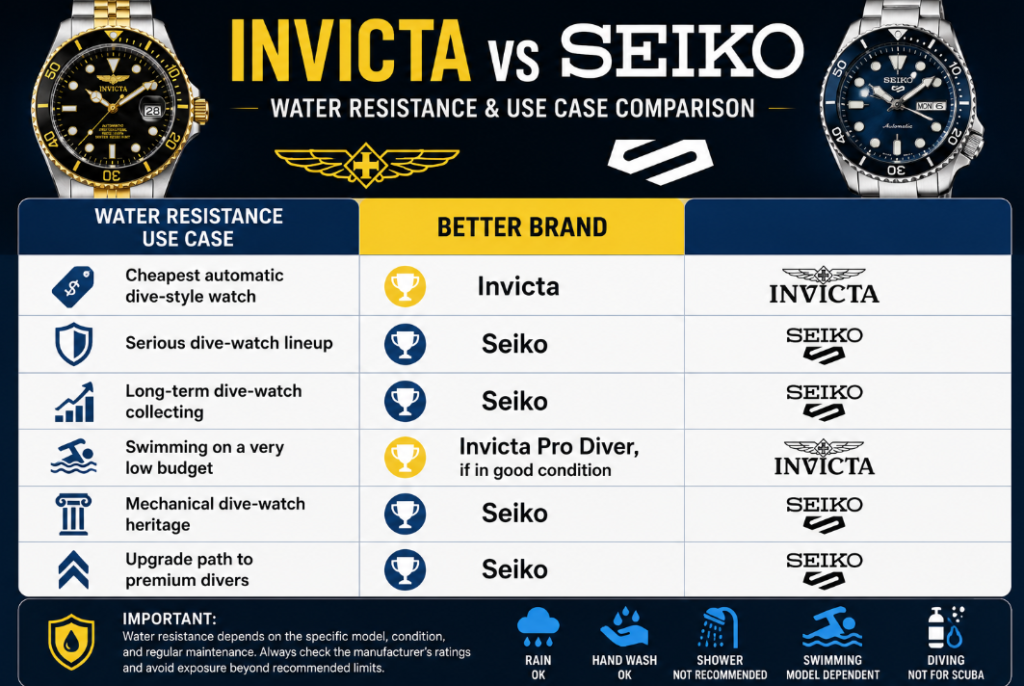
Invicta wins some budget spec battles. The Pro Diver 8926OB is officially listed with 200m water resistance and a screw-down crown, which is impressive at its usual street price. Seiko 5 Sports models often have 100m water resistance, so on paper they are weaker than the Invicta Pro Diver. However, Seiko’s real dive-watch strength is the Prospex lineup. Prospex offers more serious divers, better enthusiast trust and a much broader upgrade path.
Old gaskets, damaged crowns and opened case backs can reduce water resistance on any watch.
Other Watches That Solve the Same Problem
Seiko is the better watch brand. It has stronger reputation, better originality, a larger collector community, better long-term appeal and a much better upgrade path. Invicta still has a place. The Pro Diver is one of the cheapest ways to get an automatic dive-style watch with 200m water resistance and a screw-down crown. If you buy it at the right price, it can be a fun and useful watch. The final answer is simple:
Invicta for cheap specs and bold style. Seiko for better watchmaking, better reputation and better long-term ownership. If you are buying with your wallet only, Invicta can make sense.
If you are buying with your head, Seiko is the safer choice.