The behavior of Batteries for LiftMaster Garage Door Remotes follows from its power, control, or radio system. Understanding that system makes the procedure shorter and the diagnosis more reliable.
LiftMaster remotes and accessories are part of one of the most popular garage door control systems in residential use. The handheld transmitters that you carry on your key ring are powered by small, long-lasting coin cell batteries, while external keypads and backup power modules use different types of cells depending on their design. Understanding the correct battery type and how it’s used in different LiftMaster devices helps ensure reliable operation and saves you time and money.
Most LiftMaster handheld remotes and many wireless accessories use a 3 V lithium coin cell, a format that combines compact size with long shelf life. Outdoor keyless entry keypads commonly require a 9 V alkaline battery, and built-in battery backup units inside belt-drive or DC powered openers use a 12 V sealed battery designed to keep the opener functioning during power outages. These are the most frequently encountered battery formats across the LiftMaster range.
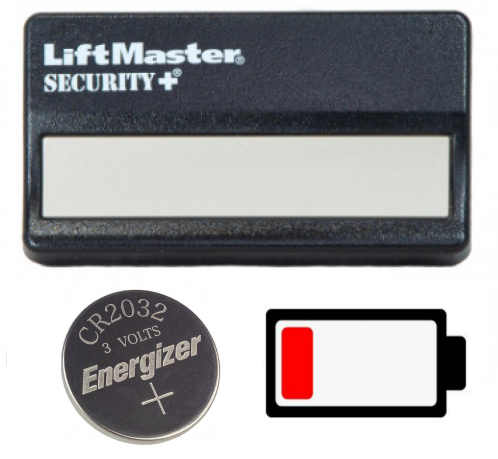
What You Need to Know First
The 3 V lithium coin cell—typically a CR2032—is the standard for most LiftMaster remotes. It fits into a small holder inside the remote that can be accessed by sliding or snapping the back cover off with a small flat tool. This type of lithium cell is widely available at hardware stores and online and provides consistent power to the remote’s transmitter.
Wireless keypads, which are mounted near the garage door and communicate with the opener’s receiver, usually use a larger 9 V battery. This provides the extra power needed to run the keypad’s numeric pad and transmit signals back to the opener.
Some LiftMaster openers include a built-in backup battery unit to keep the system operational during utility power failures. These backup modules typically use a 12 V sealed lead-acid battery, such as the LiftMaster 485LM, and are installed inside the motor housing behind a removable cover. LiftMaster
Replace the Cell Without Disturbing Pairing
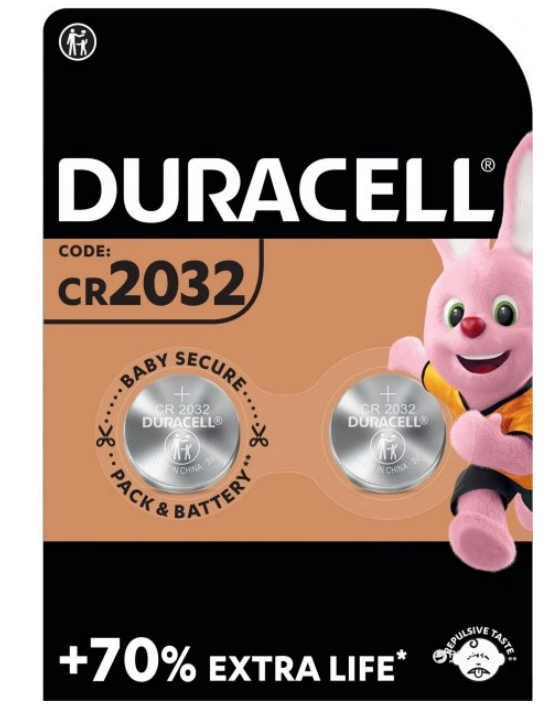
When choosing a replacement battery, it’s important to match not just the voltage but the physical size and chemistry of the original. Coin batteries like CR2032 are coded by size (20 mm diameter, 3.2 mm thickness) and chemistry (lithium), which influence both fit and performance.
Replacing the battery with a different size—even if the voltage matches—may cause poor contact or reduced life. For keypad and backup unit batteries, always use the same form factor as specified by the manufacturer to ensure proper operation.
Remote Families and Their Battery Types
LiftMaster Models and Their Batteries
Below is a reference table summarizing common LiftMaster remote and accessory models and the battery type they require. This covers the handheld transmitters, wireless keypads, and backup power modules that you’re most likely to encounter in everyday use.
| Model / Device | Type | Battery | Typical Voltage | Notes |
|---|---|---|---|---|
| 371LM | 1-button remote | CR2032 | 3 V | Standard handheld transmitter; single coin cell. eBay |
| 373LM / 373P | 3-button remote | CR2032 | 3 V | Common multi-button remote; one lithium cell. Learn Garage Doors |
| 375UT / 380UT | 2-button universal remote | CR2032 | 3 V | Universal remote for multiple brands. pacha-automation.com |
| 893LM / 893MAX | 3-button remote | CR2032 | 3 V | Security+ / MAX series; single coin cell. Learn Garage Doors |
| 891LM / 890MAX | 1-button remote | CR2032 | 3 V | Smaller handheld versions in the MAX lineup. Learn Garage Doors |
| 971LM / 970LM | Single/3-button remote | CR2032 | 3 V | Newer remotes often use the same lithium coin cell. Learn Garage Doors |
| Keypad 877MAX / 878MAX | Wireless keypad | 9 V alkaline | 9 V | Outdoor keyless entry; replace 9 V battery periodically. Learn Garage Doors |
| Keypad 9747E / 780EV | Wireless keypad | 9 V alkaline | 9 V | Older keypad models still widely used. Learn Garage Doors |
| 485LM backup battery | Opener backup | Sealed 12 V | 12 V | Installed inside opener for power outage backup. LiftMaster |
This table focuses on the most commonly used remotes and accessories. In general:
- CR2032 coin cells are the go-to choice for handheld remotes because they fit the small battery wells and provide stable voltage through most of their lifespan.
- 9 V alkaline batteries are chosen for devices with larger power requirements like keypads.
- 12 V backup batteries are specialized units installed inside select LiftMaster openers to maintain function during brownouts or outages.
Common Maintenance and Performance Tips
Remote performance can decline gradually as the battery weakens. If a remote transmits inconsistently or requires close proximity to the opener before working, refreshing the coin cell often restores reliable operation. Similarly, keypads may fail to respond or power up without a fresh 9 V battery inside. Keeping spare batteries on hand can make routine maintenance quick and straightforward.
For built-in backup batteries, periodic inspection and replacement according to the opener’s maintenance schedule helps ensure that the backup function remains ready when needed. Over time, sealed lead-acid backup batteries like the 12 V modules may lose capacity and need replacement.
Record the model, module, battery, or receiver information you confirmed for Batteries for LiftMaster Garage Door Remotes; that note will make the next service faster than repeating the lookup.