A Yale smart lock battery issue usually shows up in a familiar way. The lock starts beeping, the keypad becomes slow, the app shows a warning, or the motor sounds weaker than usual. In many cases, the fix is simple – replace the batteries before the lock goes fully flat.
This guide covers Yale smart lock battery replacement, common battery types, low battery warnings, battery life, and what to do if the lock is not working after a battery change.
- What battery does a Yale smart lock use?
- Yale smart lock battery table
- How to change battery on Yale smart lock
- Yale door lock battery replacement tips
- Yale smart lock low battery warning
- Yale smart lock battery life
- Why Yale smart lock batteries drain fast
- What happens if Yale smart lock battery dies?
- Yale door lock battery dead – how to open it
- How to check battery level on Yale smart lock
- Yale smart lock not working after battery change
- Do rechargeable batteries work in Yale smart locks?
- Yale smart lock instructions for fewer battery problems
- Final thoughts
- Author
What battery does a Yale smart lock use?
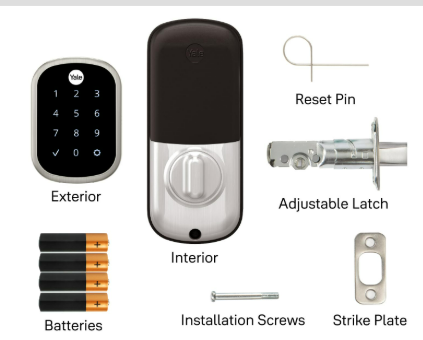
The Yale smart lock battery type depends on the model. Many Yale electronic deadbolts use AA batteries, while some Yale smart locks and emergency access systems also involve a 9V battery feature for backup power from the outside.
If you are trying to identify the Yale door lock battery type before buying replacements, the easiest approach is to check the battery tray inside the lock. For most homeowners, the main concern is whether the lock takes standard household batteries or a different pack.
Yale smart lock battery table
| Yale model or type | Typical battery setup | Notes |
|---|---|---|
| Yale Assure Lock and similar keypad deadbolts | AA batteries | One of the most common Yale door lock battery replacement setups |
| Yale smart deadbolt models | AA batteries | Battery compartment is usually on the interior side |
| Google Yale Lock / Nest Yale Lock | AA batteries | Often searched as google yale lock battery or nest yale lock replace batteries |
| Yale Linus Smart Lock | Varies by version | Users often search yale linus smart lock battery replacement separately |
| Yale smart lock with emergency jump feature | Internal AA batteries plus 9V emergency contact | This is why people search yale lock 9v battery or yale lock 9 volt battery |
| Yale Smart Lock 2 | Model-dependent battery setup | Often searched as yale smart lock 2 battery life or yale smart lock 2 battery replacement |
The most important thing is not guessing. Yale smart lock batteries can vary by product line, so it is always better to match what your battery tray or manual shows rather than forcing the wrong battery size.
How to change battery on Yale smart lock
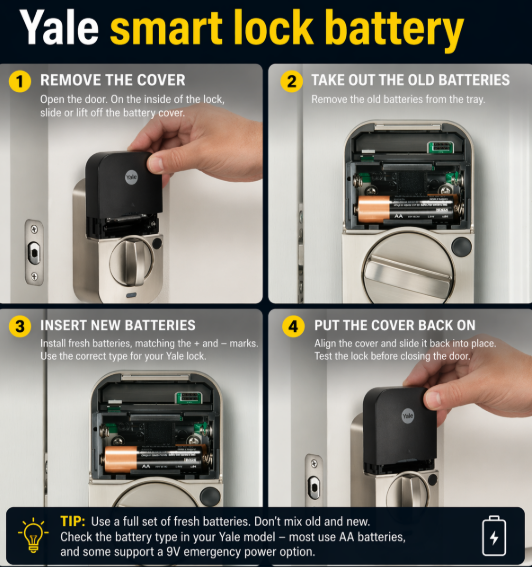
A Yale smart lock battery change is usually simple and only takes a few minutes.
- Open the door and keep it open during the whole process.
- Go to the inside part of the lock.
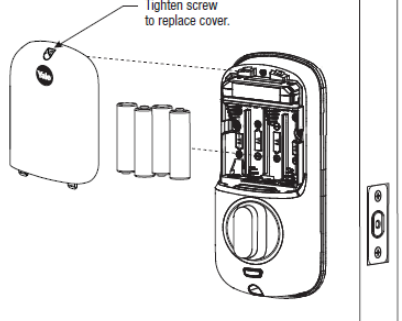
- Remove the interior cover.
- Take out the old batteries or the battery pack.
- Insert the new batteries in the correct direction.
- Reattach the cover securely.
- Test the lock before closing the door.
That is the basic process behind searches like how to change Yale smart lock battery, how to replace battery on Yale smart lock, and replace battery Yale smart lock.
Yale door lock battery replacement tips
A smooth Yale door lock battery replacement is not only about swapping batteries. A few simple details help avoid problems right after installation.
Use a full fresh set. Do not mix old and new batteries.
Match the polarity carefully. One battery installed the wrong way can stop the lock from working.
Do not force the cover. If the battery cover does not sit properly, the batteries may not make good contact.
Test with the door open. This is the safest way to avoid lockouts.
Use good quality batteries. Cheap batteries can cause unstable behavior and shorter battery life.
Yale smart lock low battery warning
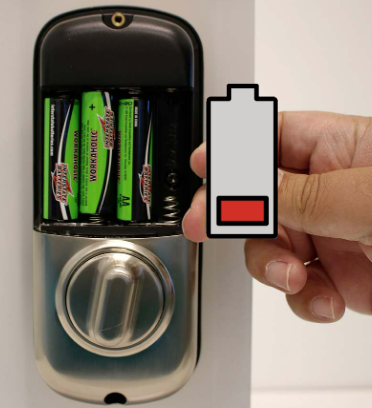
A Yale door lock low battery warning can appear as a beep, flashing indicator, in-app notification, or reduced motor strength. In daily use, the warning may show up before the lock fully stops working, which gives you time to replace the batteries.
Common signs include:
- beeping during locking or unlocking
- slower keypad response
- weaker or slower deadbolt movement
- battery notification in the app
- warning lights on the lock
This also covers search intent for Yale smart lock low battery warning, Yale smart lock battery notification, Yale lock battery status, and Yale smart lock battery status.
Yale smart lock battery life
Yale smart lock battery life depends on the model, battery quality, temperature, door alignment, and how often the lock is used. A connected lock used many times a day will usually drain faster than a basic keypad model.
Locks with Wi-Fi, Matter support, constant app communication, or heavy remote usage may run through batteries faster than simpler locks. That is why some users specifically search for Yale smart lock with Matter battery life or Yale smart lock battery draining fast.
In general, if your Yale smart lock battery life feels unusually short, the problem is often not just the batteries themselves.
Why Yale smart lock batteries drain fast
If your Yale smart lock battery drain seems excessive, there are usually a few likely causes.
Poor door alignment. If the bolt rubs against the strike plate, the motor has to work harder every time.
Heavy smart feature use. Frequent app checks, remote commands, or integrations can increase power use.
Cold weather. Batteries often perform worse in colder conditions.
Low-quality batteries. Weak batteries can drop voltage early and make the lock behave unpredictably.
Loose battery contact. If the battery tray or cover does not sit correctly, power delivery may become inconsistent.
This section naturally helps with Yale smart lock battery drain and Yale smart lock battery draining fast without forcing the phrases unnaturally.
What happens if Yale smart lock battery dies?
If the Yale smart lock battery dies completely, the keypad or smart features may stop working. On some models, you may still have a physical key. On others, Yale provides an emergency 9V contact point on the outside so you can temporarily power the lock and enter a code.
That is the reason behind searches like Yale door lock battery dead, Yale smart lock battery dead, Yale smart lock flat battery, and what happens if Yale smart lock battery dies.
If your model supports emergency jump power, the outside contact is only meant to provide temporary power so you can unlock the door – it does not replace the internal batteries.
Yale door lock battery dead – how to open it
If the batteries are flat and you are locked out, the solution depends on your lock model.
Use the physical key if your Yale lock has one.
Use the external 9V emergency contact if your model supports it. This is why people search Yale lock 9v battery, Yale smart lock 9v battery, or Yale smart lock battery replacement from outside.
Replace the internal batteries from inside once you regain access.
It is smart to keep a spare key available and not wait until the lock becomes completely unresponsive.
How to check battery level on Yale smart lock
If you want to know how to check Yale smart lock battery or how to check battery level on Yale smart lock, there are usually two main ways.
In the app. Many Yale smart locks connected to an app will show battery level or a battery status warning.
On the lock itself. Some models show a low battery warning through sound or indicator lights rather than an exact percentage.
This also covers searches like Yale smart lock battery level and Yale smart lock check battery level.
Yale smart lock not working after battery change
If the Yale smart lock is not working after battery change, do not assume the lock is broken right away. In many cases, the issue is caused by installation or contact problems.
Check battery direction. One reversed battery is enough to stop the lock.
Remove and reinstall the batteries. A clean reinstall often fixes simple contact issues.
Inspect the battery cover. A loose Yale smart lock battery cover can stop the batteries from sitting firmly.
Test the lock with the door open. This helps you see whether the motor is moving freely.
Look at the bolt alignment. If the deadbolt binds against the frame, the lock may appear faulty even with fresh batteries.
This section helps cover Yale smart lock not working after battery change and Yale smart lock problems in a practical way.
Do rechargeable batteries work in Yale smart locks?
Some users look for a Yale smart lock rechargeable battery option, but rechargeable cells are not always the best choice for smart locks. Many electronic locks work more reliably with standard alkaline batteries because voltage behavior is more predictable.
If you do try rechargeables, make sure the lock accepts them properly and monitor performance closely. If the lock starts showing early low battery warnings, switching back to quality alkaline batteries is usually the safer option.
Yale smart lock instructions for fewer battery problems
Good Yale smart lock instructions always come down to the same habits:
- replace all batteries together
- use good quality matching batteries
- keep the battery contacts clean
- do not wait until the lock is completely dead
- test the lock with the door open after every battery change
- make sure the deadbolt moves smoothly into the strike plate
These small steps help prevent many of the most common Yale smart lock battery issues.
Final thoughts
A Yale smart lock battery change is usually easy, but the right approach depends on your specific model. Many Yale locks use internal AA batteries, while some also support an external 9V emergency power method if the internal batteries go flat.
If the lock starts beeping, shows a low battery warning, or becomes slow and inconsistent, replace the batteries early rather than waiting for a full failure. And if the Yale smart lock is still not working after battery replacement, check the battery direction, cover fit, and door alignment before assuming there is a bigger fault.
